|
|
Product Details:
Payment & Shipping Terms:
|
| Testing Force: | 1Kgf (9.8N)、6.25Kgf (61.29N)、7.813Kgf (76.6N)、15.625Kgf (153.2N)、30Kgf (294.2N)、62.5Kgf (612.9N). Total Of Six Gears | Min Measuring Unit: | 2μm |
|---|---|---|---|
| Magnification Of Microscope: | 50X | Duration Time: | 0~60S |
| Overall Dimension: | 520×190×650mm(L*W*H) | Net Weight: | 40kg |
| Max Height Of Specimen: | 160mm | Power Supply: | AC220V±5%,50~60Hz |
| Carried Standard: | GB/T231.2, JJG150 | ||
| Highlight: | Aluminum Brinell Hardness Tester,Plastic Brinell Hardness Tester |
||
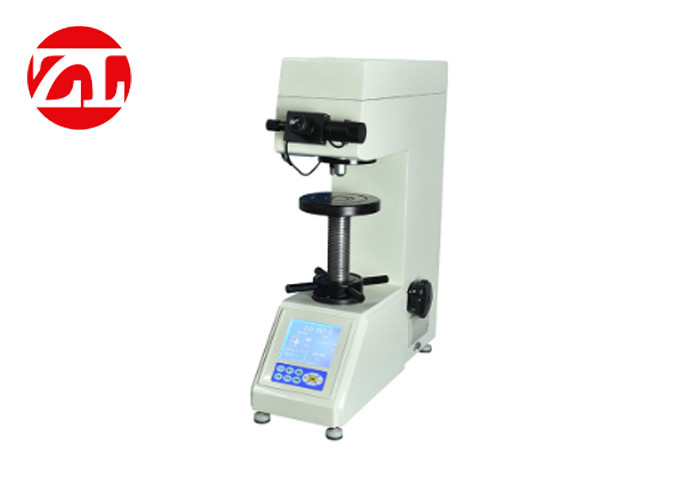
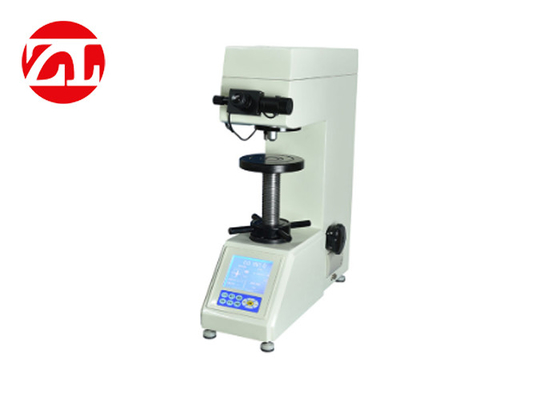
The HBS-62.5 digital display small load Brinell hardness tester is a high-tech opto-mechanical integration product featuring novel design, excellent reliability, superior operability, and intuitive operation. This advanced display device utilizes precision mechanical technology and optoelectronic technology for micro Vickers and Knoop hardness testing applications.
The machine employs computer software programming and optical measurement systems. Through soft key input, operators can select different indenters and force values, adjust measurement light source intensity, choose dwell times, and view indenter diameter, test force, measurement range, and direct hardness readings on the LCD display. This eliminates the need for tedious look-up tables, simplifies operation, and enhances measurement accuracy through rotary encoder technology.
Brinell hardness testing utilizes large pressure applications, large ball diameter indenters, and produces large indentation diameters, making it ideal for hardness measurement of metal materials with large grain structures. This includes cast iron, non-ferrous metals and their alloys, various annealing and tempering treatments, and most factory-delivered steel products. This instrument specifically targets the lower Brinell hardness range, making it particularly suitable for softer metals such as pure aluminum, copper, lead, tin, zinc, and their alloys, where it delivers highly accurate measurements with excellent reproducibility and representation.
| Parameter | Specification |
|---|---|
| Testing Force | 1Kgf (9.8N), 6.25Kgf (61.29N), 7.813Kgf (76.6N), 15.625Kgf (153.2N), 30Kgf (294.2N), 62.5Kgf (612.9N) - Total six gears |
| Minimum Measuring Unit | 2μm |
| Microscope Magnification | 50X |
| Duration Time | 0~60S |
| Overall Dimensions | 520×190×650mm (L×W×H) |
| Net Weight | Approximately 40kg |
| Maximum Specimen Height | 160mm |
| Maximum Specimen Width | 135mm |
| Power Supply | AC220V±5%, 50~60Hz |
| Carried Standards | GB/T231.2, JJG150 |
| Standard Accessories | Measuring Microscope set, Diameter: 2.5, 5 and 10mm Hard Alloy Ball Indenters, 2 Standard Hardness Blocks, Large Testing Table, Medium Testing Table, V-shaped Testing Table, Power Cable |
The Brinell hardness tester utilizes one of the oldest hardness testing methods still commonly used today. Invented in Sweden by Dr. Johan August Brinell in 1900, this test is often employed to determine the hardness of castings and forgings whose grain structure is too coarse for accurate Rockwell or Vickers testing.
Brinell Hardness Test Procedure: In this test method, a predetermined force (F) is applied to a tungsten carbide ball of fixed diameter (D), held for a predetermined time period, then removed. The spherical indenter creates an impression (permanent deformation) on the test metal piece.
A hardness test is typically performed by pressing a specifically dimensioned and loaded object (indenter) into the surface of the material being tested. The hardness is determined by measuring either the depth of indenter penetration or the size of the impression left by the indenter.
Manual reading is straightforward. You look through the lenses, focus the optics, position the lens on the impression, and read the result in millimeters. The millimeter measurement is then converted to HBW (Hardness Brinell) by referencing a conversion table that provides the corresponding hardness value.
The Brinell hardness testing uses a 10mm hardened steel ball, while the Rockwell test uses either a much smaller steel ball (<4mm) or a diamond cone, depending on the material being tested. The Rockwell test measures the depth of the indentation, whereas the Brinell test measures the width of the indentation.
In the Brinell hardness test, an optical method measures the size of indentation left by the indenter. Unlike the Vickers method which uses a pyramid-shaped indenter, the Brinell method employs a spherical indenter pressed into the specimen.
The Brinell hardness number (BHN) is calculated by dividing the load applied by the surface area of the indentation.
Contact Person: Ms. Fiona Zhong
Tel: +86 135 3248 7540